
Finishing, Cleaning & Abrasives
Showing 13–24 of 91 results
-
-
-

-
 $ 9.99 Select options This product has multiple variants. The options may be chosen on the product page
 -
-

-
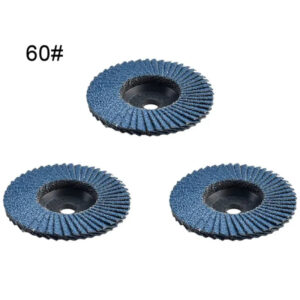 Price range: $ 15.99 through $ 18.99 Select options This product has multiple variants. The options may be chosen on the product page
 -
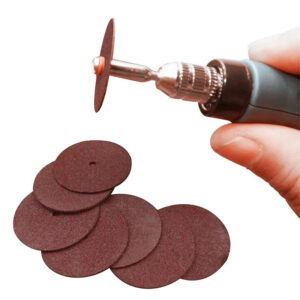 $ 24.99 Select options This product has multiple variants. The options may be chosen on the product page
 -
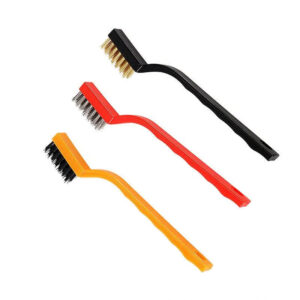
-
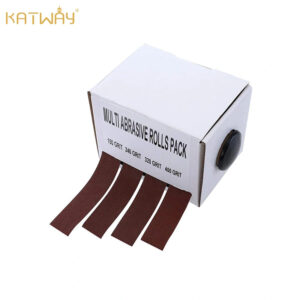
-

-
Showing 13–24 of 91 results
What is Finishing, Cleaning?
How do they help with jewellery making?
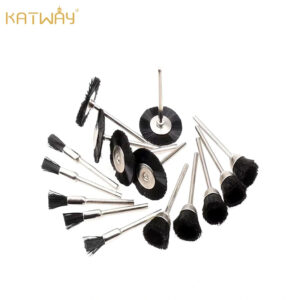
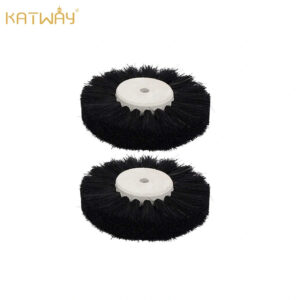
The Katway Shop sells polishing and cleaning tools designed to provide the perfect end result for your jewellery pieces. This wide range of products, from the most basic abrasive paper to wheel and brush tools made of different materials, helps to refine the details of the jewellery’s surface, remove some of the smallest imperfections and enhance the overall shine of the jewellery. Moreover, our products are very friendly to newcomers, and with some very simple steps, you can give your jewellery pieces an optimal smoothness and perfect appearance, making them radiate a more eye-catching luster.
Katway is your reliable partner in jewelry making!
After the casting, soldering, and joining steps, it is especially important to polish and clean your jewellery. Once the jewellery has been cast, you can use flex shafts to gently polish the surface, fixing small imperfections and restoring its shine. In addition, any uneven lines in your jewellery after soldering & joining can be re-polished using our polishing tools. Rest assured that Katway will be your professional assistant in becoming an expert jewellery maker!
FAQ – Finishing, Cleaning & Abrasives
Q1: Why doesn’t my jewelry look shiny even after polishing?
A1: In many cases, polishing alone isn’t enough. Small scratches, casting marks, or soldering residue should be removed first using the appropriate abrasives before moving on to polishing compounds and buffing wheels.
Q2: Should I use abrasive paper or polishing wheels first?
A2: Abrasive paper is typically used first to smooth rough surfaces and remove imperfections. Once the surface is even, polishing wheels and brushes can help bring out a brighter, mirror-like finish.
Q3: How can I remove scratches from silver or gold jewelry?
A3: Fine abrasives are often the best starting point for scratch removal. After smoothing the surface, use polishing tools to restore shine and blend the repaired area with the rest of the piece.
Q4: What finishing tools should every beginner own?
A4: Many beginners start with abrasive paper, polishing wheels, cleaning brushes, and a basic polishing compound. These essential jewelry finishing tools can handle most common polishing and surface-refining tasks.
Q5: Can polishing remove all imperfections from jewelry?
A5: Polishing can improve many surface flaws, but deeper dents, pits, or structural defects may require additional repair work before finishing and cleaning tools are used.
Q6: How often should polishing wheels and brushes be replaced?
A6: Replace them when they become worn, contaminated, or less effective. Fresh polishing accessories help maintain consistent results and reduce the risk of scratching finished jewelry.