
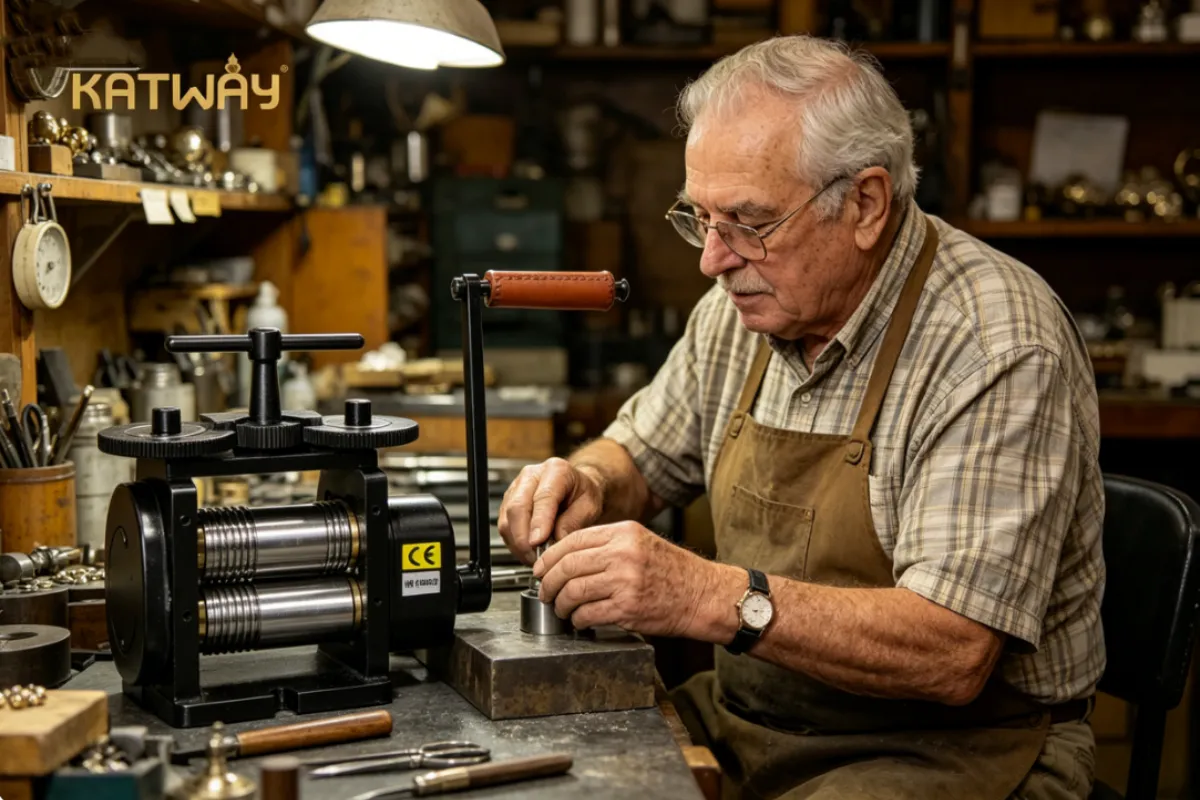
A fine piece of finished jewelry depends on perfect teamwork between craftspeople and premium tools. A high-quality jewelry rolling mill is absolutely essential. It compresses metal ingots into thin sheets with metal rollers. You can also replace different rollers to press metal wires and create unique textures, making every jewelry piece more refined and professional.
As jewelry engraving techniques keep improving, rolling mills have become more functional and practical. They are widely used to make delicate metal wire decorations for modern jewelry designs. However, countless new brands keep popping up, and rolling mill styles are more diverse than ever. This makes it much harder for buyers to pick the right model.
If you’re stuck choosing a rolling mill, don’t worry. Based on the latest industry standards, this 2026 updated guide will walk you through how to select a qualified jewelry rolling mill.
Do You Know Which Jewelry Rolling Mill You Need?
Before checking detailed parameters, you need to distinguish between the two mainstream types: manual rolling mills and electric rolling mills.
Manual Jewelry Rolling Mill
Most beginners and outsiders think manual rolling mills are small and compact, easy to place anywhere.
This is completely true. Standard manual models measure 35–40 cm in length, 18–22 cm in width, and 30–35 cm in height including the hand crank. They take up very little space, fit on ordinary desks, and require no extra dedicated workbench area.
Operation is simple and straightforward. Slowly feed metal materials into the roller gap and turn the hand crank at a steady speed. Most mainstream roller widths range from 80 mm to 110 mm, ideal for daily handmade jewelry production.
It features an adjustable thickness range of 0.1 mm to 5 mm, capable of rolling metal as thin as 0.1 mm. It fully meets small-batch metal sheet production, and you can easily replace rollers to produce metal wires.
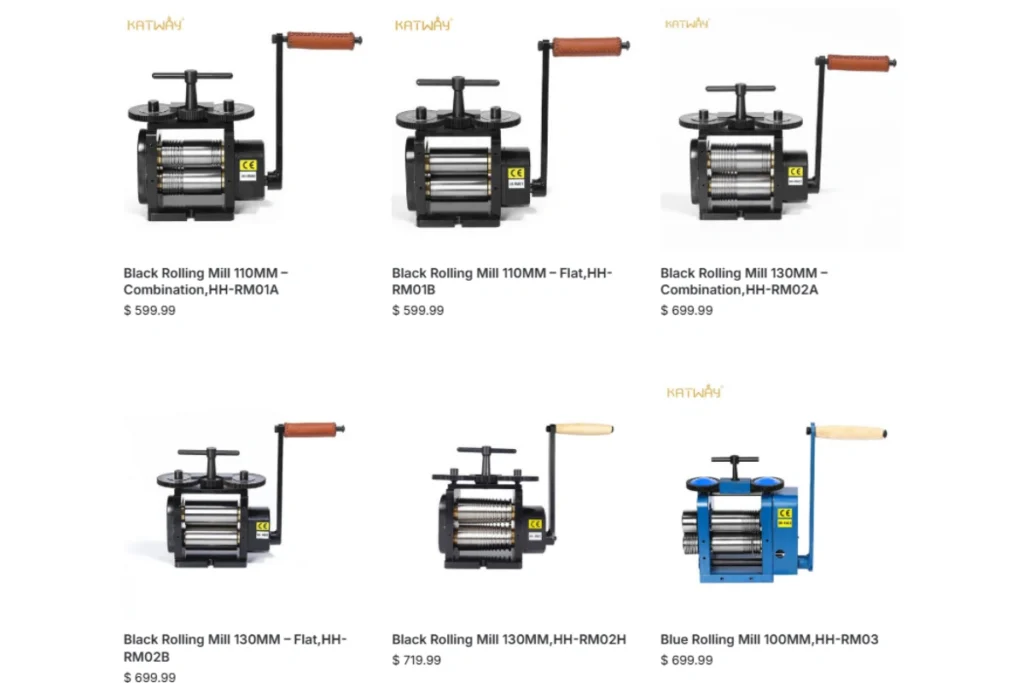
Since it is fully hand-operated, manual rolling mills offer outstanding cost performance. High-quality models generally cost between $500 and $1,000. Katway manual rolling mills are reasonably priced with solid, sturdy construction. One customer commented:
“The custom metal tags I make with this mill look clean and stylish. The working efficiency is great, and I’m totally satisfied.”
(User pictures and reviews are attached below.)
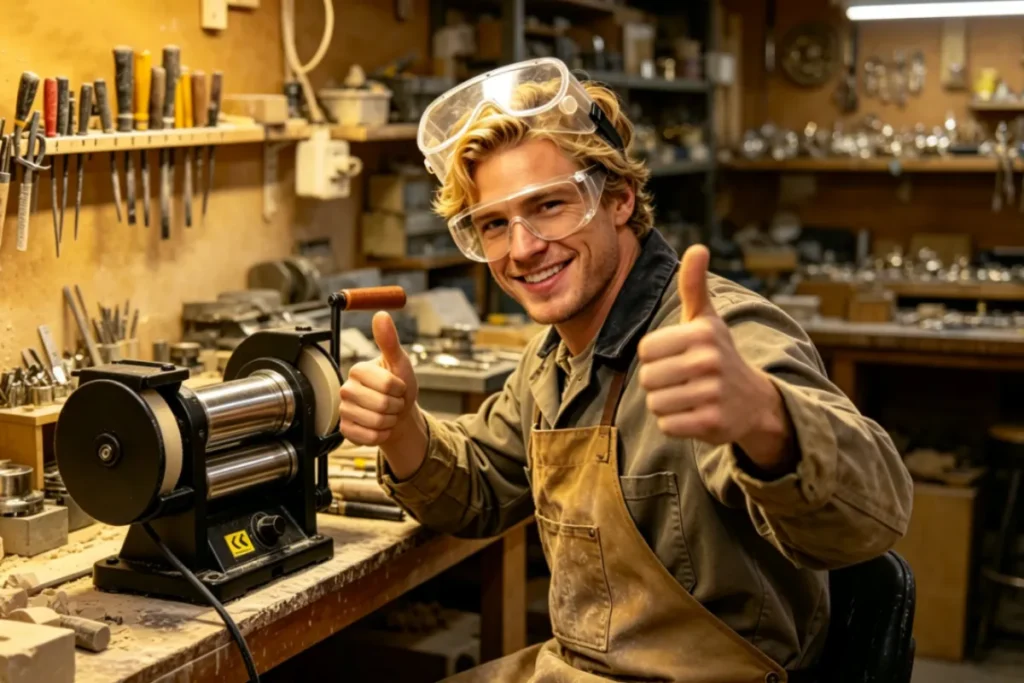
Overall, compared to pure manual hammering and flattening, hand-crank rolling mills save massive time and labor. They require no electricity, run silently, and maintain stable output. They are perfect for engraving hobbyists and jewelry-making beginners.
Electric Jewelry Rolling Mill
Electric rolling mills are designed for high-volume jewelry workshops and large-scale jewelry manufacturers. Statistics show that less than 1% of individual users purchase electric rolling mills every year.
They are bulky and not suitable for home use. Heavy-duty electric models come with 1200–1600 mm roller widths and 4:1 reduction gears. They need fixed installation and stable placement, making them a poor fit for small home workspaces.
Regular electric rolling mills are equipped with 750W to 1.5kW high-power motors and must connect to industrial power supplies. Continuous operation creates loud noise, which may cause neighbor complaints.
Even so, electric rolling mills have obvious advantages. Their working efficiency is over five times higher than manual models. They deliver highly uniform metal sheets and wires with high precision, perfect for mass and frequent rolling tasks.
Powerful upgraded motors lead to higher prices, ranging from $3,500 to $8,000. For personal home use, the overall practicality of electric rolling mills is greatly reduced.
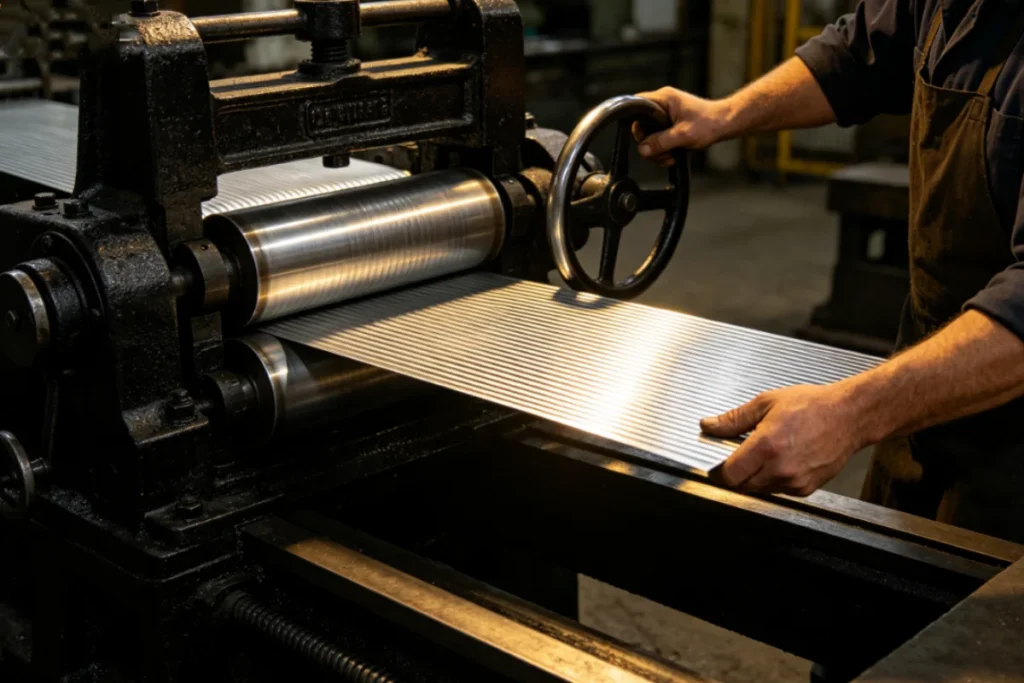
Key Specs to Look for When Picking a Rolling Mill (Only Practical Factors)
Next, we’ll cover the most practical core parameters. Whether you choose manual or electric, these configurations determine long-term safety and processing results.
Roller Material
Chrome steel rollers are the most popular choice. They are cost-effective, highly versatile, compatible with gold, silver, iron and other common precious metals, and highly rust-resistant.
If you mainly work with high-grade precious metals, tungsten carbide / hard alloy rollers are your best option. They feature extreme wear resistance, excellent mirror finishing, and low metal loss during processing.
Stay away from low-cost no-name rolling mills with ordinary carbon steel rollers. These scratch easily, rust quickly, and greatly damage jewelry quality.
Roller Width
Choose the width according to your daily creation needs:
- 80 mm: Ideal for small jewelry pieces
- 100 mm: The most common size for most hobbyists, covering daily engraving needs
- 120 mm: The golden size for small workshops with strong compatibility for complex craftsmanship
- 140 mm and above: Perfect for mass metal sheet production
Gear Reduction Ratio
For manual rolling mills, a 4:1 reduction ratio is the most scientific and user-friendly design. It saves effort, runs smoothly, and easily processes thick metal materials.
1:1 direct drive structures are not recommended. They require excessive physical strength and struggle with thick metal plates.
Rolling Precision
Qualified high-end rolling mills deliver balanced pressure on both sides.
A simple test: if the hand wheel locks firmly and the finished metal sheets have consistent thickness on both sides, the machine is well-made. Inferior equipment causes uneven thickness and serious material waste.
Roller Combination Functions
A standard jewelry rolling mill is equipped with flat rollers for sheet pressing, square wire rollers for square metal wires, and round / semicircular rollers for round wires. Pattern rollers are optional accessories.
Complete supporting parts are one of Katway’s core strengths. Each unit comes with a full roller set and daily maintenance accessories. One machine supports full-type metal processing without extra purchases.
Body Structure
A solid frame guarantees stable high-intensity operation. Lightweight machines are easy to tip over and cause safety accidents.
Cast iron frames are stronger and more stable than aluminum alloy frames with less vibration.
Check the base mounting holes and fully sealed gearbox. These details effectively extend the machine’s service life.
Minimum & Maximum Rolling Thickness
2026 mainstream industry standards:
Max feeding thickness: 3–5 mm
Min discharging thickness: 0.1–0.2 mm
Machines meeting these standards fully support customized processing and small-batch production.
Extra Parameters for Electric Models
For professional workshops planning to upgrade to electric equipment, focus on motor power and emergency stop devices. A sensitive emergency stop system cuts power instantly during malfunctions, greatly improving operation safety.
Budget Guide & Product Recommendations
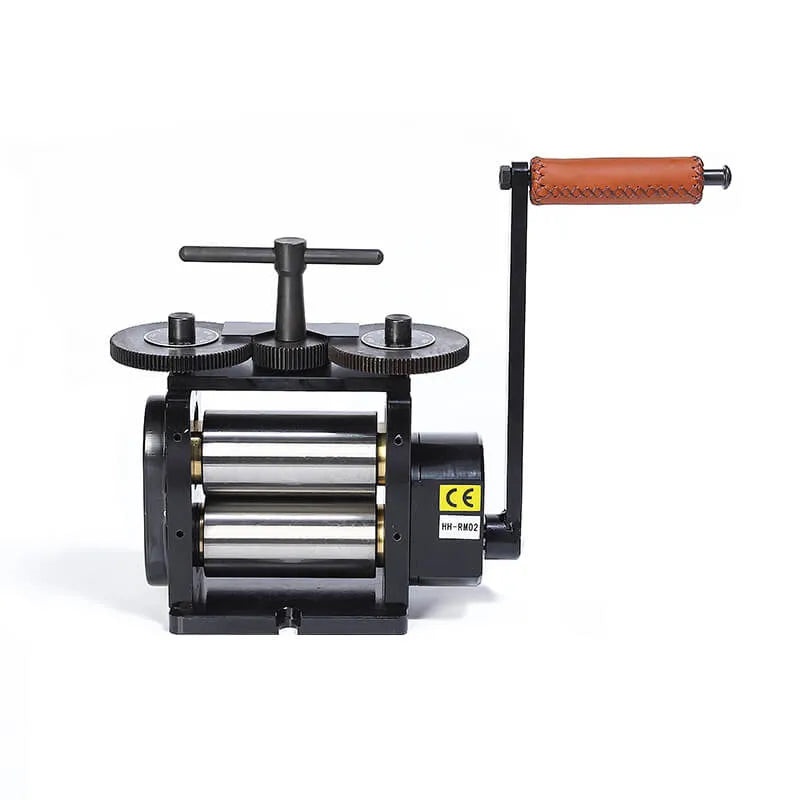
Black Rolling Mill 130MM – Flat,HH-RM02B
For beginners buying their first rolling mill, cost performance matters most. There is no need to overspend on professional heavy-duty machines, nor should you buy cheap fragile products.
The versatile 110 mm manual rolling mill is the best choice. It delivers stable daily performance and handles most metal jewelry components. It is beginner-friendly and reliable for long-term daily use.
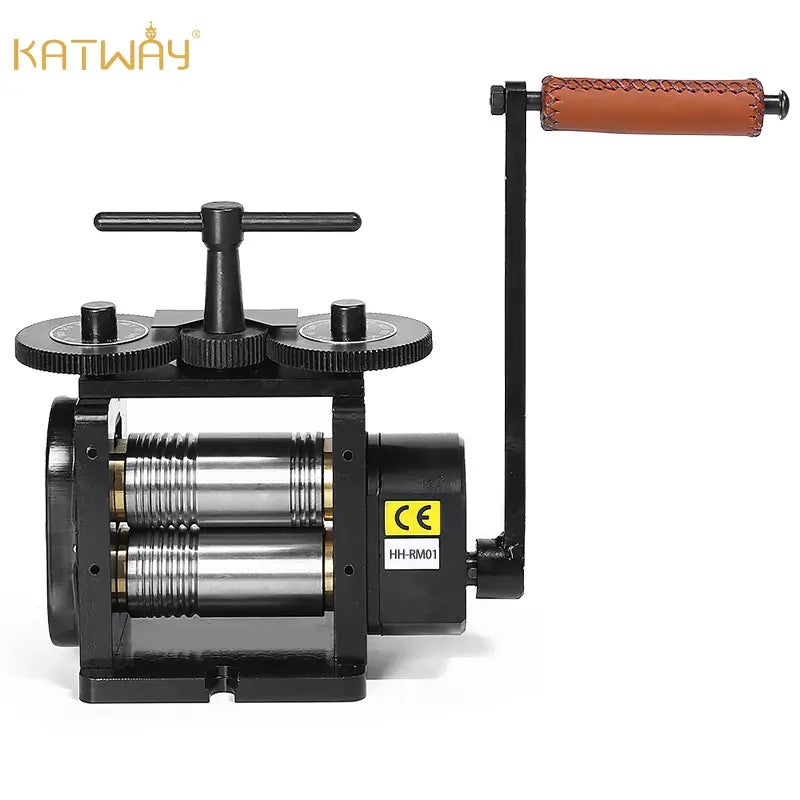
Black Rolling Mill 110MM – Combination,HH-RM01A
Traditional rolling mills require frequent roller replacement for sheets and wires. This upgraded model solves that problem.
Each roller is designed with a smooth half and a serrated half. Use the serrated side for wire rolling and the smooth side for sheet flattening. One machine meets two core needs and saves frequent roller replacement time.
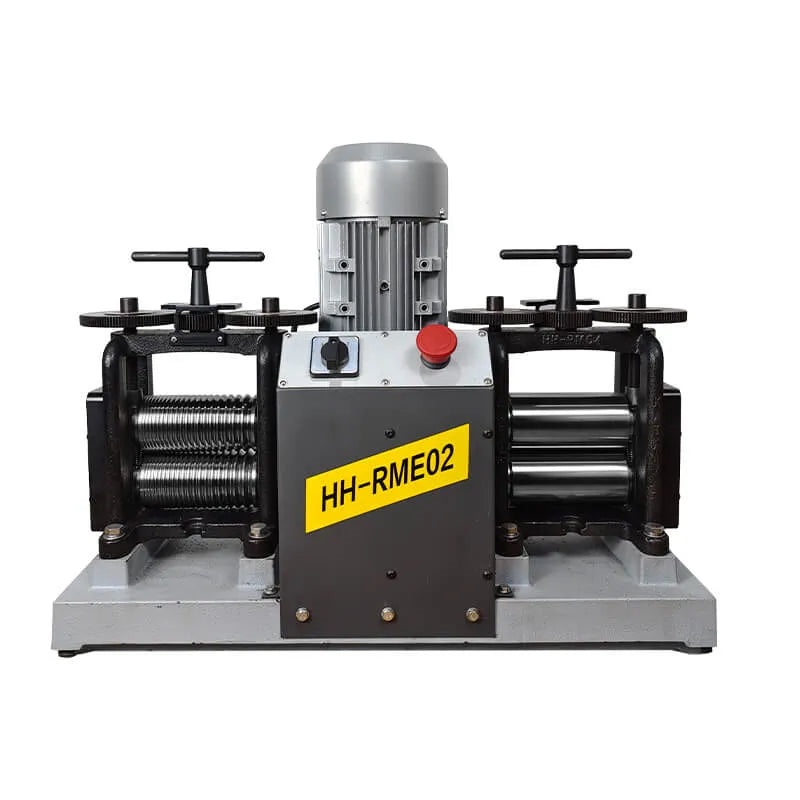
Double Head Electric Rolling Mill 130mm, HH-RME02
Compared with regular models, this dual-purpose electric mill can roll metal sheets and wires at the same time. It integrates a smooth flattening roller and a serrated wire roller with independent dual functions.
It supports two-person operation and fully meets the high-output demands of small-batch jewelry production.
2026 Buying Pitfalls to Avoid (Extremely Important)
As the saying goes, cheap products rarely come with good quality.
Many low-cost generic rolling mills hide serious quality defects. Premium materials cost more, so ultra-low prices always mean shoddy raw materials.
Many buyers choose cheap mills for trial use, only to encounter soft deformed rollers, uneven pressing, or even complete breakdown after just one or two uses.
Choosing a formal and professional brand is the key to stable quality and reliable after-sales service.
Katway has focused on jewelry engraving tools for years. We provide a complete after-sales system, including free global shipping, full accessory packages, 24-hour online customer service, and an official 1-year warranty. We offer one-stop solutions to solve equipment operation and maintenance problems for global users.
Investing in a high-quality rolling mill is a wise long-term choice for jewelry creation.
We hope this 2026 updated rolling mill selection guide helps you find your ideal jewelry rolling mill.
Click here to browse the full Katway rolling mill collection >>>