
Success in jewelry making goes far beyond selecting premium materials and meticulous craftsmanship; what matters even more is the finish of the surface. This often-overlooked step plays a crucial role in the jewelry industry, as a flawless surface is not only an aesthetic choice but also a symbol of quality and craftsmanship.
Electrolytic polishing and hand polishing are currently the two most common techniques. Both enhance surface finish, but they differ significantly in principle, results, and applications. So, which method is better? The answer actually depends on your specific needs.
Understanding Electrolytic Polishing
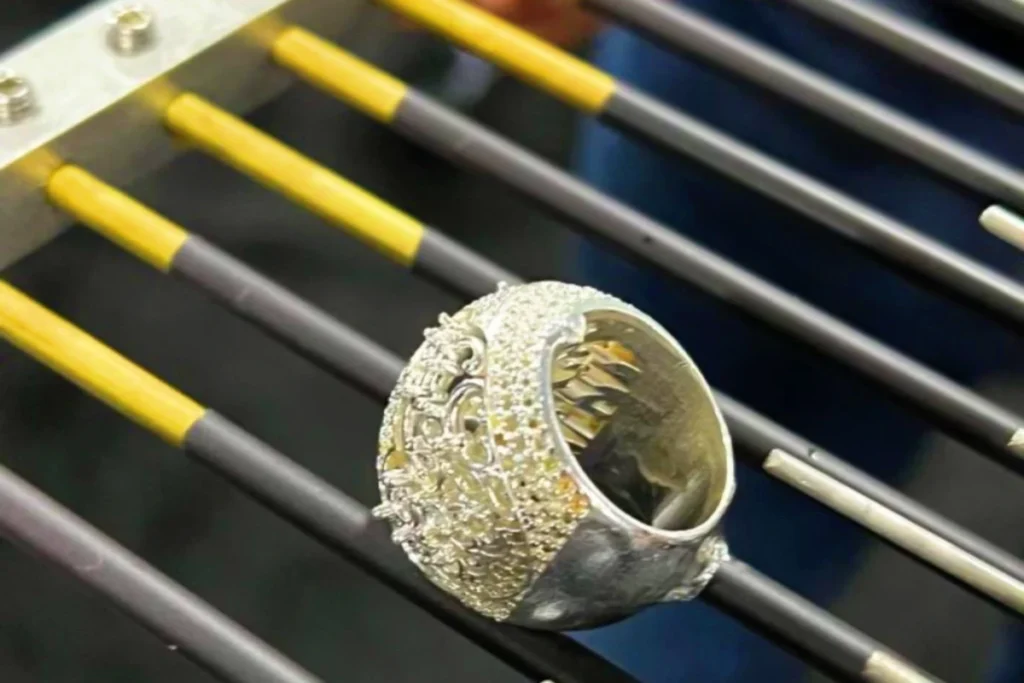
Electrolytic polishing is a process that uses electrochemical methods to remove material from a metal surface, achieving a highly uniform polish even in hard-to-reach areas like beneath prong settings. It is particularly well-suited for handling intricate details and hard-to-reach areas, making it an ideal method for achieving exceptional surface quality.
This process is similar to “reverse electroplating,” where the outer layer or “skin” of a metal component is removed (electropolishing improves the jewelry’s surface by selectively dissolving the outermost layer of metal), thereby eliminating microscopic surface imperfections (such as small burrs and scratches). The result is a jewelry surface as smooth as a mirror! Because it allows for batch processing and is highly efficient, electrolytic polishing is widely used in medical devices, precision parts, and industrial manufacturing.
Understanding Hand Polishing Techniques
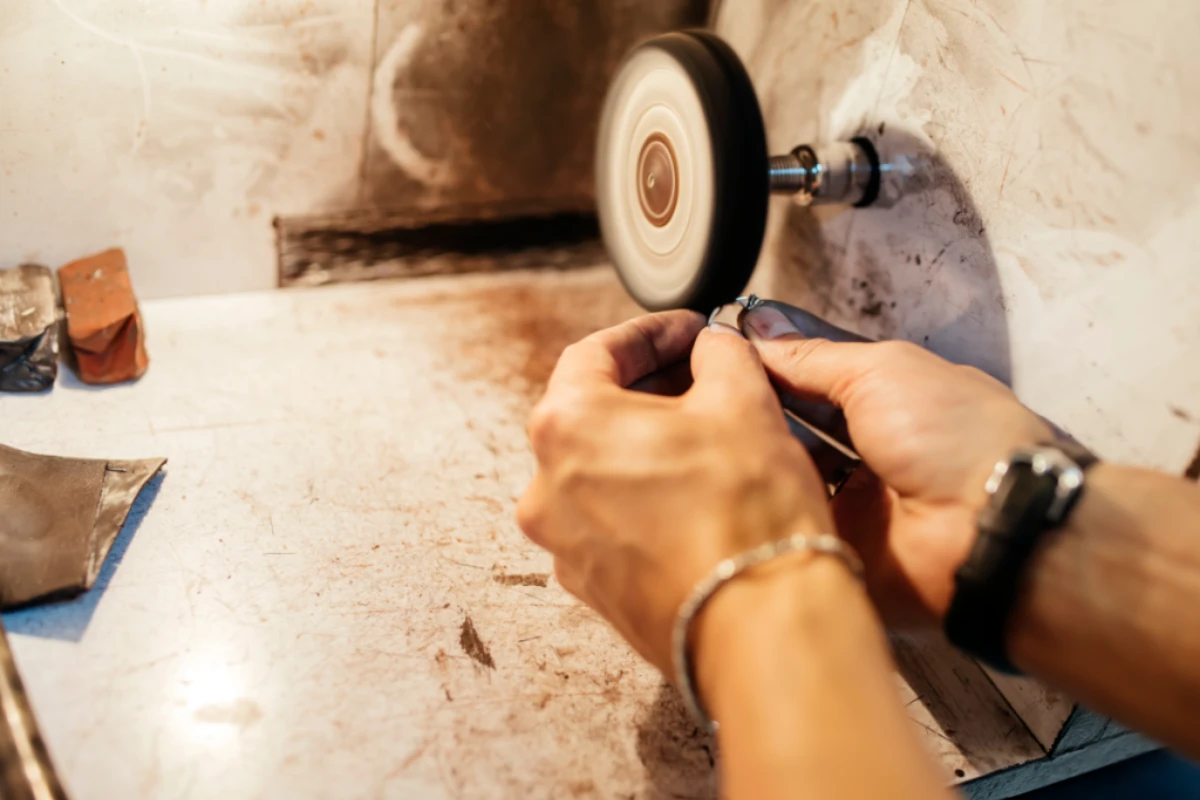
Hand polishing involves manual operation using rotary tools, such as micro-motors, flexible shafts, or polishing motors, as well as traditional hand tools. This method requires a high level of operator experience and relies heavily on technical skill, particularly for high-end surface finishing.
Although the level of precision may not match that of electrolytic polishing, the operator can adjust the technique according to specific needs to achieve a high-gloss or even mirror-like finish. It allows for localized treatment of specific areas. By creating different levels of luster and visual effects on various surfaces of a piece, it is better suited for decorative and artistic works. Therefore, in jewelry making, hand polishing remains an irreplaceable and crucial step.
Can electrolytic polishing completely replace manual polishing?
Many mechanical engravers often ask this question. However, the answer is clearly no—it cannot completely replace manual polishing.
While electrolytic polishing excels at improving surface smoothness and removing microscopic defects, it still has limitations in the following areas: it is difficult to achieve a true mirror-like high-gloss finish, it lacks the ability to perform precise localized control, and it lacks artistic expressiveness—all of which are precisely the strengths of manual polishing.
Practical Applications in the Industry
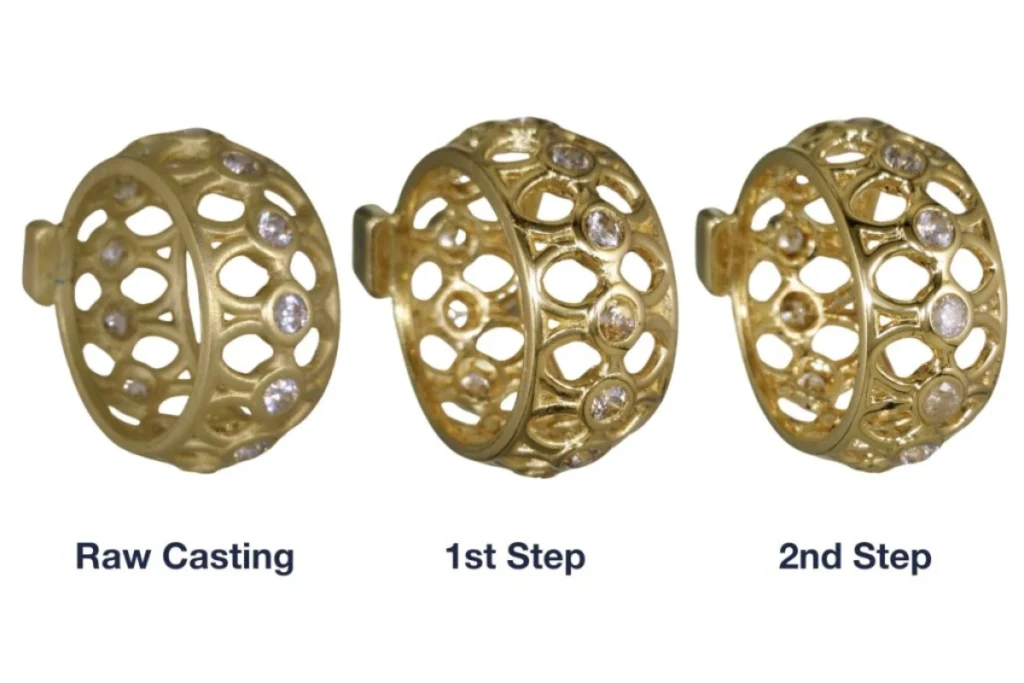
In actual production, these two processes are typically used in conjunction rather than as substitutes for one another. In a production setting, manual polishing faces significant challenges because it relies on skilled labor—a resource that may be scarce—and often results in inconsistent polishing outcomes. Different polishing technicians often prefer different polishing wheels and compounds, leading to variations in surface finish among workpieces completed by different workers, and the risk of over-polishing exacerbates this issue. The appropriate use of electrolytic polishing can effectively address these manual challenges and improve efficiency. The common process is as follows:
Step 1: Precise Material Removal
The electrolytic polishing process effectively smooths metal surfaces while preserving fine details and maintaining the original design and geometry, preventing any rounding or deformation of edges.
Step 2: Ensuring Consistent Results for Every Product
Precise control of material removal using an electrolytic polishing machine ensures surface finish and quality for every piece of jewelry. This high level of consistency is crucial for maintaining brand reputation and meeting customer expectations.
Step 3: Enhancing Luster
While machine-polished surfaces are precise and uniform, they often lack luster. Manual re-polishing with sandpaper or polishing paste is therefore necessary. Designs requiring special attention may undergo multiple polishing passes to achieve a multi-layered luster effect.
Step 4: Refining Details to Enhance Texture
A key factor in attracting consumers to jewelry pieces is their unique texture. To ensure each product exhibits a distinctive texture, designers are given creative freedom to refine details according to their vision. By manually creating varied light reflections in specific areas (using rollers or other hand-polishing tools), they ultimately achieve a unique tactile quality.
Step 5: Precious Metal Recovery
Since the metal removed from the surface during the electrolytic polishing process is collected on the cathode, precious metal recovery becomes much simpler! The cathode collects pure metal, which is a significant advantage compared to the situation where metal particles in dust collector bags are mixed with abrasive and polishing agent debris.
If you ask any jeweler what they enjoy doing most on their pieces, how many would say polishing?! This combination ensures both efficiency and the final result. It makes the combination of electrolytic polishing and hand polishing an extremely attractive method for achieving high-quality surface finishes, suitable for hard-to-reach areas and allowing the operator to apply their own creative touch to specific sections, thereby enhancing the overall quality of the piece.
Discover Katway’s Electrolytic Polishing Machines
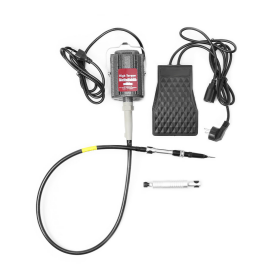
Polishing technology offers you the opportunity to adopt modern processes like electrolytic polishing while incorporating manual techniques, effectively elevating the standard of your jewelry and giving you—the jeweler—a competitive edge. Most conventional polishing machines are bulky and ill-suited for engravers. To enable engraving enthusiasts, small jewelers, and small workshops to achieve the perfect combination of electrolytic polishing and manual polishing, Katway has introduced an ultra-convenient flexible-shaft suspended motor for jewelry making. With a maximum speed of 20,000 RPM, it delivers the speed and efficiency required for precision jewelry tasks such as polishing, grinding, and engraving. The flexible-shaft design ensures ease of operation and allows for effortless access to complex areas, making it an ideal choice for the fine finishing of small, delicate jewelry pieces such as rings, pendants, and bracelets.
Summary
Electrolytic polishing and hand polishing are not mutually exclusive; rather, they are complementary. If you prioritize efficiency, electrolytic polishing is the way to go; if you prioritize texture and detail, hand polishing remains indispensable. In modern manufacturing and the jewelry industry, combining the two is the most mature and efficient solution.
ha9ygz
Great article! Really helpful content. Check out this resource for more useful tools.